Pediatric Dentistry
First visits, cleanings, fluoride, sealants and gentle fillings for children, at a pace that suits the child in the chair.
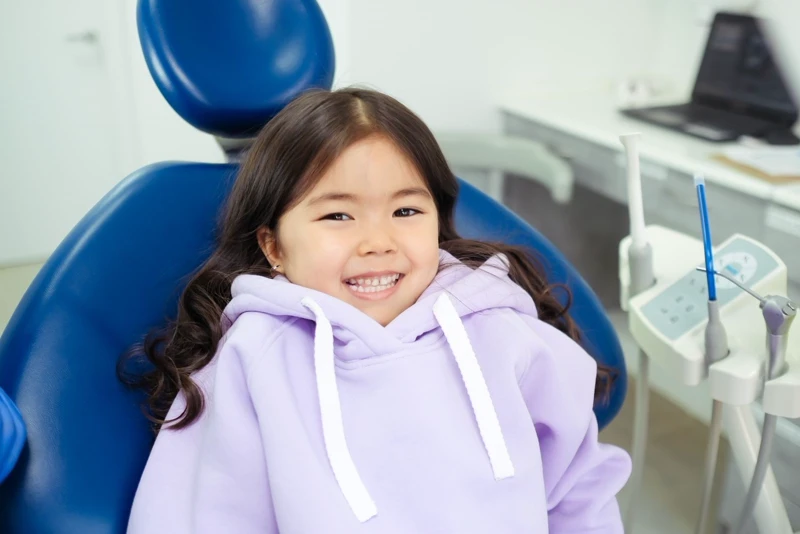
The single most useful thing a dental practice can do for a child is make sure their early visits are unremarkable. A child who has been to the dentist six times and had nothing frightening happen becomes an adult who books check-ups without thinking about it. A child whose first visit was an emergency filling at age seven frequently becomes an adult who avoids dentists for a decade. We take that seriously, and it shapes how these appointments run.
The first visit
Bring your child by their first birthday, or within six months of the first tooth appearing. That sounds absurdly early to most parents and there is a good reason for it. The first visit is not really about the teeth. It is about the child sitting in a chair, meeting somebody friendly, and finding out that the place is boring rather than scary.
In practice that visit takes about fifteen minutes. Your child usually sits on your lap. We count teeth, look for early problems, check how the jaw is developing, and talk to you about brushing, bottles, dummies, thumb-sucking and what to do about the fact that they will not open their mouth for a toothbrush. That last one is the most common question we get and there are real techniques for it.
How we handle nervous children
Dr. Petrisko has additional training in behaviour guidance and sees most of our younger patients. The approach is tell-show-do: every instrument is explained in ordinary words, demonstrated on a finger or a model, and only then used. Nothing goes into a child's mouth as a surprise.
We also let the appointment end early. If a four-year-old is genuinely not coping, we will stop, do something small and achievable so the visit finishes on a success, and bring them back sooner. Forcing a procedure through a distressed child buys you one filling and costs you their next fifteen years of dental attendance. It is a bad trade and we do not make it.
One thing that helps enormously, and that we would gently ask of parents: avoid words like hurt, pain, needle, drill or brave, even reassuringly. Saying "it will not hurt" plants the idea that it might. We have our own vocabulary for everything and it works better.
Cleanings and fluoride
Children's cleanings are shorter and gentler than adult appointments. We polish, we floss, and we apply fluoride varnish, which takes about a minute and is painted on with a small brush. Fluoride varnish measurably reduces decay in baby teeth and is one of the highest-value few minutes in dentistry.
Sealants
As adult molars come through, at roughly six and again at twelve, the deep grooves on their biting surfaces are the most decay-prone surfaces in the mouth. A sealant flows resin into those grooves and sets it with a light. No drilling, no injection, a few minutes per tooth. For a child with deep grooves this is the single most effective preventive measure available.
Fillings in baby teeth
Parents often ask why a baby tooth needs filling if it is going to fall out anyway. The answer depends on timing. A back baby molar is not lost until around age eleven or twelve, so a cavity at six has years to become an abscess. Baby teeth also hold space for the adult teeth behind them; losing one early frequently causes crowding that later needs orthodontic correction.
That said, if a tooth is genuinely about to be lost anyway, we will say so and monitor rather than treat. The decision is about the individual tooth and the individual child, not a policy.
Practical things that actually help
Brush twice a day with a fluoride toothpaste, and do it for them until they are about seven, because the manual dexterity for effective brushing simply is not there before then. Supervise afterwards until nine or ten. Spit, do not rinse; rinsing washes away the fluoride you just applied.
The frequency of sugar matters more than the total amount. One dessert is considerably less damaging than the same sugar spread across six snacks, because each exposure restarts an acid attack lasting twenty minutes or more. Between meals, water and milk are the safe options. Juice, including the diluted kind, counts as a sugar exposure every time.
Book their check-up alongside your own where you can. Children who watch a parent sit calmly in the chair learn that it is ordinary faster than any explanation achieves.