Dental Implants
Single implants, implant bridges and implant-retained dentures, planned with 3D imaging and placed in our own operatory.
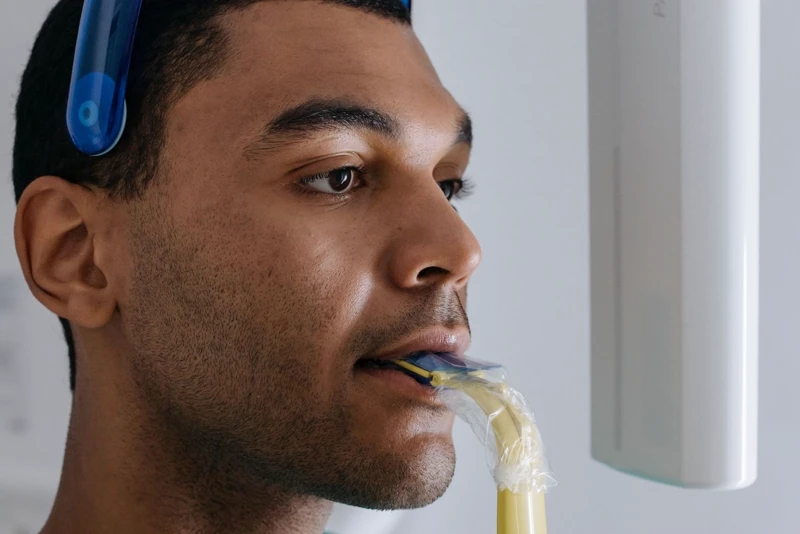
A dental implant is a titanium post placed into the jawbone to take the place of a missing tooth root. Bone grows directly onto the surface over a few months, and once that has happened the post can carry a crown, a bridge or a denture. It is the closest thing dentistry has to replacing a tooth rather than compensating for one.
We plan and place implants in this practice rather than referring them out, and the same dentist who places yours also restores it. That matters more than it sounds: when placement and restoration are split between two practices, the handover is where problems tend to appear.
Why replace a missing tooth at all
A gap is not a stable situation. The teeth either side gradually tip into it and the tooth above or below drifts down, which changes how your bite meets and makes those teeth harder to clean. The bone that used to support the missing root also begins to resorb, because bone maintains itself in response to load and there is no longer any load.
That bone loss is the reason we would rather talk about a plan sooner than later. Replacing a tooth is a straightforward procedure. Rebuilding a ridge that has been empty for fifteen years first is a considerably bigger one.
Planning with 3D imaging
Every implant case starts with a cone beam scan, which produces a three-dimensional image of your jaw. That shows us bone height and width in exact millimetres and, critically, where the nerve canal and sinus actually run in your anatomy rather than where they run on average.
From that scan we plan the position digitally, then have a surgical guide printed. The guide fits over your teeth and directs the drill to the planned position, angle and depth. It makes the placement more precise and the appointment shorter, and it means the implant ends up where the crown needs it to be rather than merely where there happened to be bone.
What the appointment is like
Placement is done under local anaesthetic and takes roughly an hour for a single implant. Most patients are surprised by how undramatic it is. There is no sensation of pressure of the kind people associate with an extraction, and the majority describe the recovery as easier than having a tooth out.
Afterwards there is some swelling for two or three days, managed with ordinary over-the-counter painkillers. Most people go back to work the next day. We see you a week later to check the healing.
Then comes the wait. The bone needs three to four months to integrate with the post before it can be loaded. You are not left with a gap in the meantime if the tooth is visible; a temporary is provided.
Implant-retained dentures
For patients with no lower teeth, two implants placed at the front of the jaw, with clips built into the denture, is genuinely life-changing. A conventional lower denture rests on a ridge that provides very little stability, and many people simply never adapt to one. Clipped onto two implants, it stays where it is put. Eating stops being a calculation.
Fixed full-arch options exist as well, where a full set of teeth is screwed onto four to six implants and never removed. We assess for it, and where a case is better handled by a specialist surgical centre, we say so and make the referral.
Who is a candidate
Most adults are. The factors that matter are bone volume, gum health, diabetic control if relevant, and smoking. Smoking substantially raises the failure rate, and we will discuss that frankly rather than skirt it. Where bone volume is short, grafting can often build it back, adding time and cost to the plan but making an otherwise impossible case workable.
Cost and lifespan
An implant costs more up front than a bridge and usually less than a bridge over a twenty-year horizon, because bridges typically need replacing at least once in that time and each replacement puts the supporting teeth through another cycle. Implants have a long-term success rate above ninety-five percent when maintained. Maintained means cleaned properly and checked regularly, exactly like a natural tooth.
You will get a written estimate covering the scan, the guide, the placement, the abutment and the crown as separate line items, so nothing appears later that you were not expecting.